How WHO is funded

How WHO is funded

OPS Karen Gonzalez Abril
Thanks to CERF, WHO and partners work to address in a holistic manner the health needs of vulnerable populations in areas affected by conflict in Colombia.
© Credits

WHO gets its funding from two main sources: Member States paying their assessed contributions (countries’ membership dues), and voluntary contributions from Member States and other partners. 

Assessed contributions (AC) are a percentage of a country’s gross domestic product (the percentage is agreed by the United Nations General Assembly). Member States approve them every two years at the World Health Assembly. They cover less than 20% of the total budget.

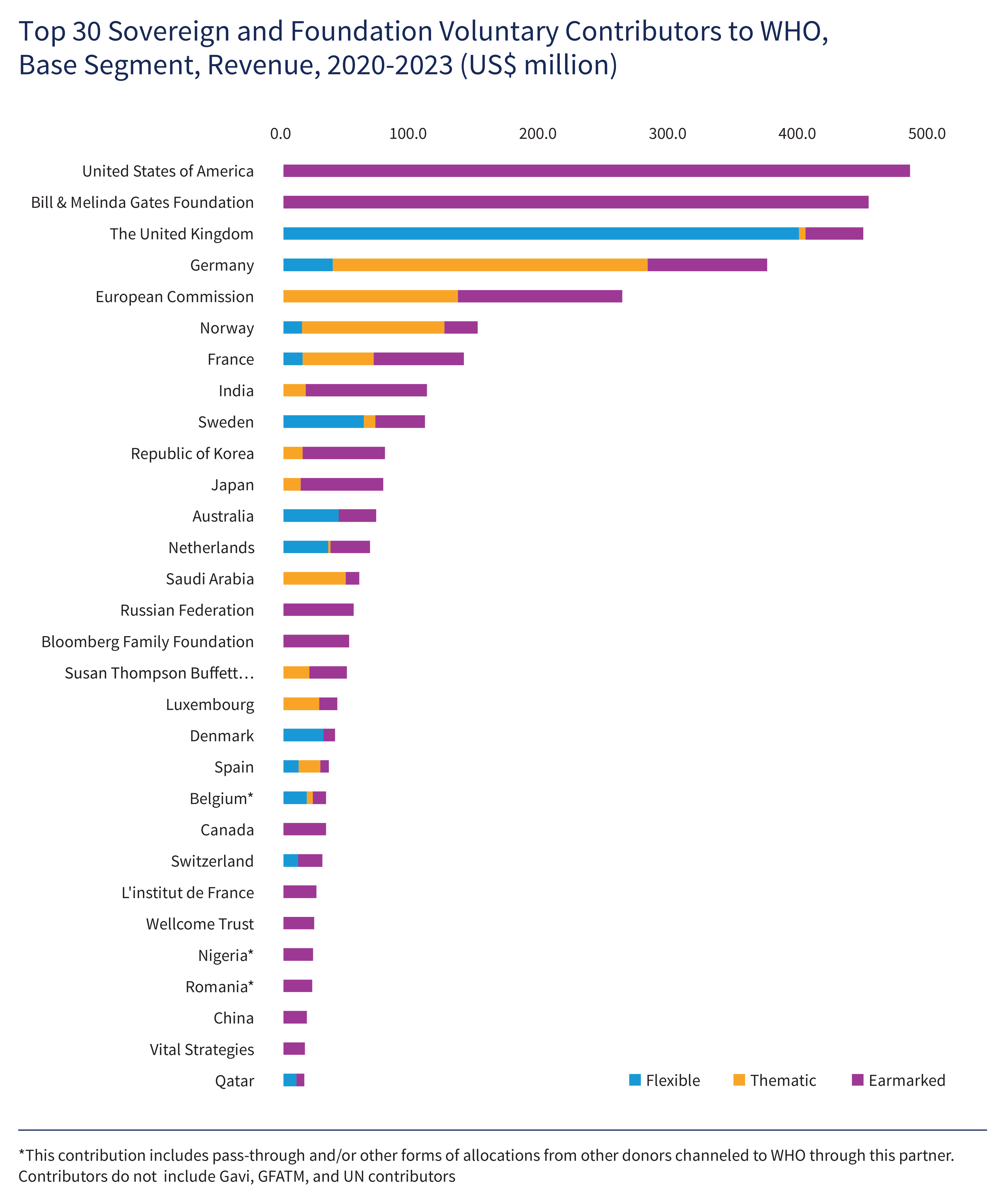
The remainder of WHO’s financing is in the form of voluntary contributions (VC), largely from Member States as well as from other United Nations organizations, intergovernmental organizations, philanthropic foundations, the private sector, and other sources. 

Assessed contributions

Assessed contributions are the dues countries pay in order to be a member of the Organization. The amount each Member State must pay is calculated relative to the country's wealth and population.

Assessed contributions have declined as an overall percentage of the Programme Budget and have, for several years, accounted for less than one quarter of the Organization’s financing. The balance is mobilized through voluntary contributions.

However, assessed contributions remain a key source of financing for the Organization, providing a level of predictability, helping to minimize dependence on a narrow donor base, and allowing resources to be aligned to the Programme Budget.

→ Read more about assessed contributions


Voluntary contributions

Voluntary contributions come from Member States (in addition to their assessed contribution) or from other partners. In recent years, voluntary contributions have accounted for more than three quarters of the Organization's financing.

Voluntary contributions (VC) are further categorized based on the degree of flexibility WHO has in deciding how to spend these funds: 

  • Core Voluntary Contributions
  • Thematic and strategic engagement funds
  • Specified voluntary contributions


Core Voluntary Contributions (CVC)

Core Voluntary Contributions are fully unconditional (flexible), giving WHO discretion to allocate these funds where they are most needed to finance the Organization’s programme budget priorities. This flexibility enables WHO to respond effectively to evolving health needs and priorities. WHO thanks all contributors to this account.

→ Core voluntary contributions (Programme Budget Portal)


Thematic and strategic engagement funds

Thematic and strategic engagement funds (partially flexible) aim to meet contributors’ requirements for reporting and accountability while providing a certain degree of flexibility in their allocation. They support more effective and efficient funding by strengthening WHO’s focus on results while aligning with contributors’ priorities.

→ Thematic funding (Programme Budget Portal)


Specified voluntary contributions

Specified voluntary contributions are tightly earmarked for specific programmatic areas, geographical locations and/or activities and must be used within an agreed timeframe. They remain an important source of financing for WHO’s work.

→ Specified voluntary funding (Programme Budget Portal)


The importance of flexible funding

WHO is extremely grateful to all contributors, particularly those who provide flexible funding and thematic and strategic engagement funds as it allows WHO to be agile and strategic in efforts to promote, provide, and protect health for all. As part of WHO's progress towards becoming a predictably, sustainably, flexibly funded Organization, Member States approved recommendations from the Sustainable Financing Working Group to increase Assessed Contributions to cover 50% of WHO's base budget by 2030, and to launch an Investment Round.

The Investment Round was launched in May 2024 with the goal to mobilize predictable and flexible resources for WHO's core work as approved in WHO's Fourteenth Programme of Work (GPW14 2025–2028) and expand WHO's donor base.


WHO’s Contingency Fund for Emergencies (CFE) allows WHO to respond rapidly to disease outbreaks and health emergencies – often in 24 hours or less. This saves lives and helps prevent unnecessary suffering. A quick response dramatically reduces the costs of controlling outbreaks and emergencies, as well as the wider social and economic impacts. WHO also funds its emergency responses from specific appeals as well as allocations from joint funds such as the UN Central Emergency Response Fund (CERF) and Humanitarian Response Plans.
The WHO Foundation is an independent grant-making foundation focused on addressing the most pressing global health challenges of today and tomorrow. Headquartered in Geneva and legally independent from WHO, the Foundation works with individual donors, the general public and corporate partners to support global public health needs, ranging from prevention, mental health and noncommunicable diseases to emergency preparedness, outbreak response and health system strengthening.