
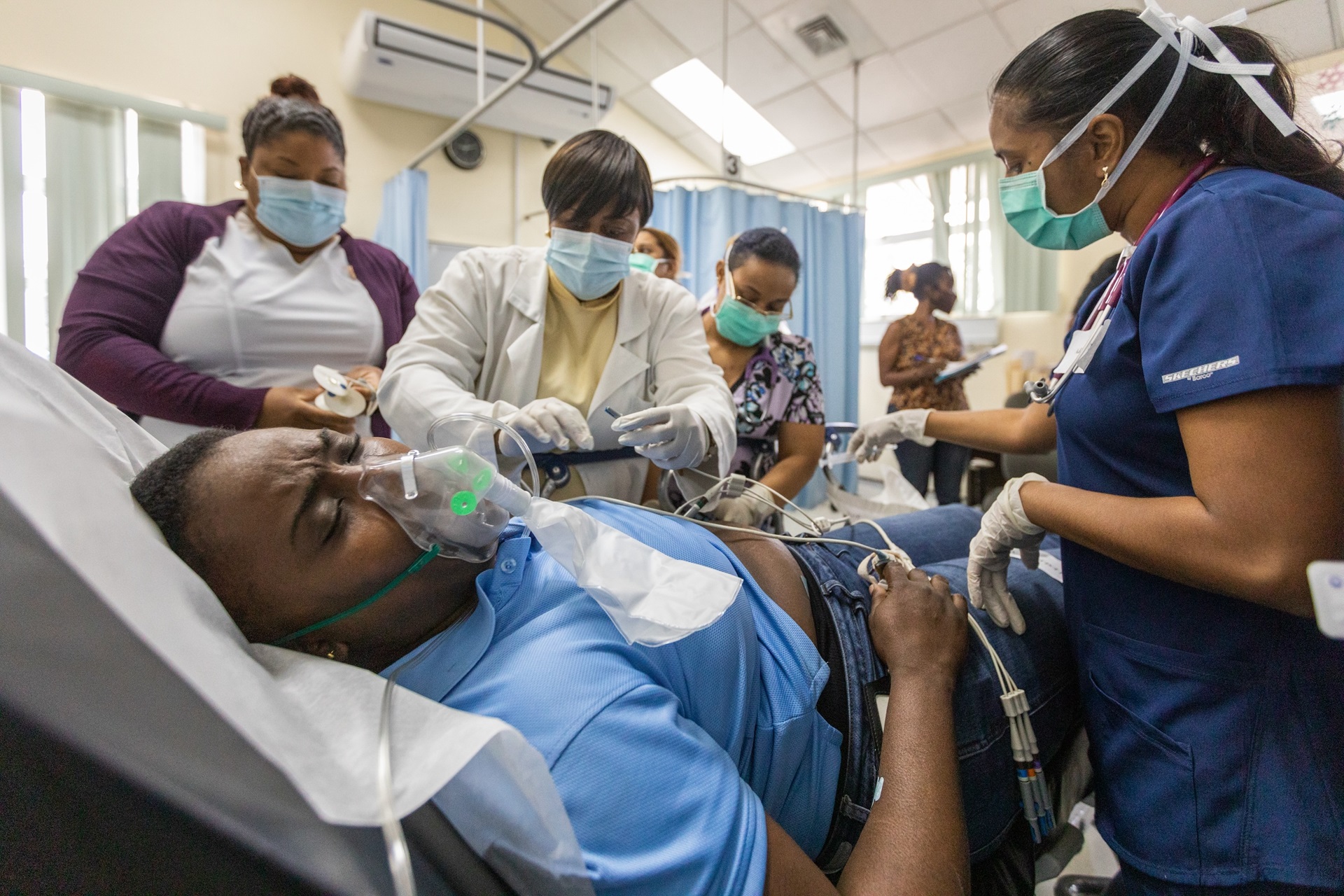
Clinical Care for Sepsis
Sepsis is the most common serious complication of infection. It affects people worldwide, but has a particularly high burden in low- and middle-income countries where resources to treat it are more limited. Estimates from 2017 suggest 48.9 million cases of sepsis occur each year, with 11 million deaths. Many people who survive sepsis suffer long-term complications as a result.1
Treatment for sepsis can save lives. Treatment requires quality integrated clinical care with primary care linked to emergency, critical and operative care by communication, transportation, referral and counter-referral mechanisms.
The 70th World Health Assembly called for the development of guidance on sepsis prevention and management to support Members States in “Improving the prevention, diagnosis and clinical management of sepsis” [WHA resolution 70.7].2
To improve clinical outcomes, people with sepsis require effective systems of care, which include key functions such as early recognition, resuscitation, targeted antimicrobial therapy, source control, intensive monitoring and detection of clinical deterioration, and continuing prevention of organ failure and complications. Effective and efficient critical care and early operative care can further reduce mortality and morbidity in health settings globally.
Each year, sepsis affects up to 50 million people and causes 11 million deaths globally. People who are critically ill with sepsis present at all levels of the health system and need to receive timely, quality care wherever they are.
Background
Integrated Clinical Care for Sepsis
The Clinical Service and Systems Unit is supporting the delivery of people centred care for sepsis patients through the following toolkit:
System planning and pathways to care

The UHC Service Planning Delivery & Implementation (SPDI) Platform supports countries in designing and implementing service packages for UHC and support countries to respond more effectively to emergencies. The SPDI Platform supports countries in understanding current service delivery for sepsis and encourages the explicit inclusion of integrated services for sepsis in national packages of services for UHC.

The Core Clinical Care Readiness (C3R) tool is designed to help health systems deliver vital services through a structured approach to key clinical pathways. C3R identifies essential functions for acute response and continuity of health services, enabling countries to identify gaps, assess barriers, and develop strategic actions to mitigate them. Sepsis is a key condition in C3R that allows countries to evaluate and plan for enhancing sepsis care at every level of the health system.
Early recognition


Resuscitation and early antibiotic administration



Ongoing Care

Quality Improvement

Sepsis Resources